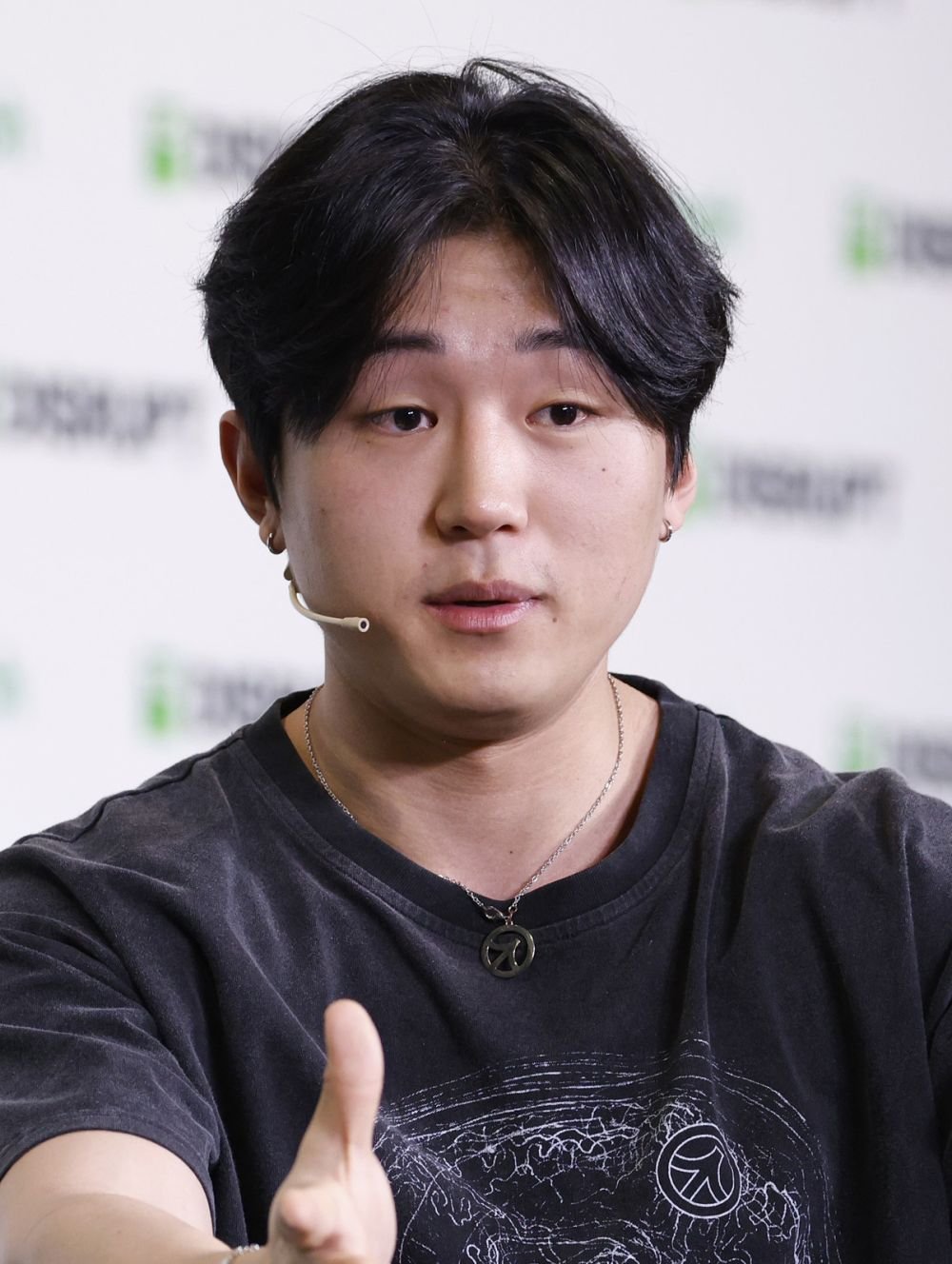
Few young founders have drawn as much attention as quickly as Chungin “Roy” Lee. The co-founder and CEO of Cluely turned a controversial student project into a venture-backed AI company in a matter of months, largely by making people argue about it. His story is worth studying, both for what that approach achieved and for what it could not protect.
From student project to funded company
Cluely began as Interview Coder, a tool Lee built with co-founder Neel Shanmugam while both were students at Columbia University. It fed users AI-generated answers during technical job interviews, invisibly. Lee publicized using it in his own interviews, including one with Amazon, which drew complaints and university disciplinary action. Both founders left Columbia to build the company.
In April 2025 they relaunched as Cluely with a deliberately provocative message: an AI assistant that would help you “cheat on everything.” The launch video and manifesto spread fast, and the company reported tens of thousands of sign-ups in its first week. Within days it announced a $5.3 million seed round co-led by Abstract Ventures and Susa Ventures. Two months later it raised a $15 million Series A led by Andreessen Horowitz.
A launch built for attention
Few companies have treated distribution as seriously as Cluely did. It relied on a large network of content creators and a steady stream of attention-grabbing posts, and it treated outrage as fuel rather than risk. It worked: a company most people had never heard of was suddenly part of the conversation about AI, work and fairness.
But attention earned through provocation comes with costs. By mid-2025 the references to cheating had quietly disappeared from Cluely’s website, and in November 2025 the company repositioned itself as an AI meeting assistant, a far more conventional category with established competitors.
The number that came back
In July 2025, Lee told TechCrunch that Cluely’s annual recurring revenue had doubled in a week to $7 million. In March 2026 he retracted it, writing on X that the figure was “the only blatantly dishonest thing i’ve said publicly online, so this is my formal retraction,” and putting the real number at $5.2 million. TechCrunch later noted that his account of how the interview came about was also inaccurate: Cluely’s own PR representative had offered Lee for the story. The correction became a bigger story than the original claim.
Lessons for founders
- Attention is a launch tactic, not a reputation. Controversy can make a company famous in a week. It cannot make customers, investors or journalists trust it.
- Every number you share becomes the public record. Once a figure is printed, it is repeated, compared and checked. Share only numbers you can stand behind.
- Corrections need to be complete. A retraction that gets other details wrong creates a second story.
- You can’t quietly delete your positioning. When a company changes what it stands for, people remember the old message. Repositioning needs an explanation, not just a new homepage.
- Credibility compounds, in both directions. Journalists and investors remember who told them the truth.
The takeaway
As of October 2026, Lee still leads Cluely from New York. His story is not a reason to avoid bold marketing. It is a reminder of what bold marketing is for. Controversy can buy a company its first week of attention. Only accuracy and trust carry it through the years after.
Sources
- Wikipedia: Cluely
- Wikipedia: Roy Lee (entrepreneur)
- TechCrunch, 21 April 2025
- TechCrunch, 20 June 2025
- TechCrunch, 3 July 2025
About Northline PR
Northline PR is a public relations agency for founders, brands and leaders. We help companies find the story only they can tell and put it in front of the people who shape opinion, through media relations, thought leadership, launch campaigns and crisis counsel. Learn more at northlinepr.space.
Talk to us
Planning a launch, an announcement or a move into a new market? Start a conversation or write to hello@northlinepr.space.